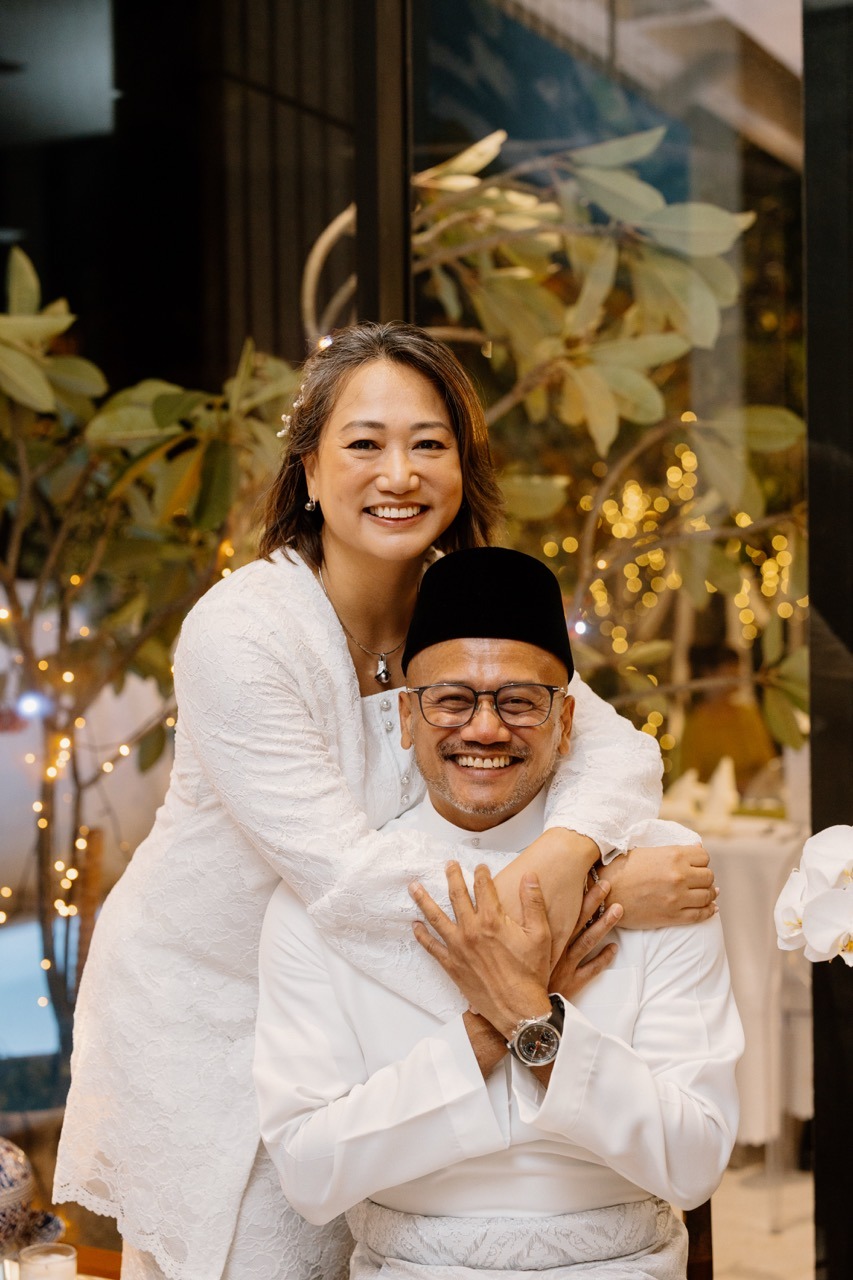
We Almost Let Six Months of Paperwork Overshadow the Wedding, then One Request changed everything.
The months leading up to my Akad Nikah were lined with legal paperwork, government office visits, a half-day conversion to Islam, and monthly trips back to the Philippines so I wouldn’t overstay my tourist visa.
Why go through all of this? Because I’m Filipina and Catholic, and my fiancé is a Malay Muslim. An Akad Nikah is the official Islamic marriage ceremony, the most sacred part of a Malay Muslim wedding, a milestone and a celebration of commitment.
But buried under months of legal documents, it began to lose its meaning and feel like nothing more than a requirement. Paperwork standing between me and a spouse visa. A box to check. A document to present at a government office so I could keep living, without complication, in the city I’ve called home since March 2018.
For us, planning became secondary under the weight of bureaucracy. It drained the romance from how I’d imagined the Akad Nikah itself, and at times even the meaning it was meant to carry.
Becoming Us
For Azran and me, there was no lightning-bolt moment. We found our way to each other through conversation, about ikigai, climate change, pop culture, the places we’d been, and the books that had shaped how we saw the world. Somewhere across all those coffee dates, hikes, and late-night conversations, we realized we shared the same values and wanted the same future. We became each other’s person.
Blending our lives after that took real intention. His people are in Malaysia, mine are in the Philippines and the States, and finding the schedules and shared moments to bring everyone together became our project.
In September 2025, Azran called my mom in the States, and then my sisters. He told them he intended to marry me and asked for their blessing. That mattered to me because it was his way of honoring my family (and the Filipino tradition of asking for a bride-to-be’s family’s blessing), so they felt included in a life milestone that belonged to both of us, and they weren’t treated as an afterthought.
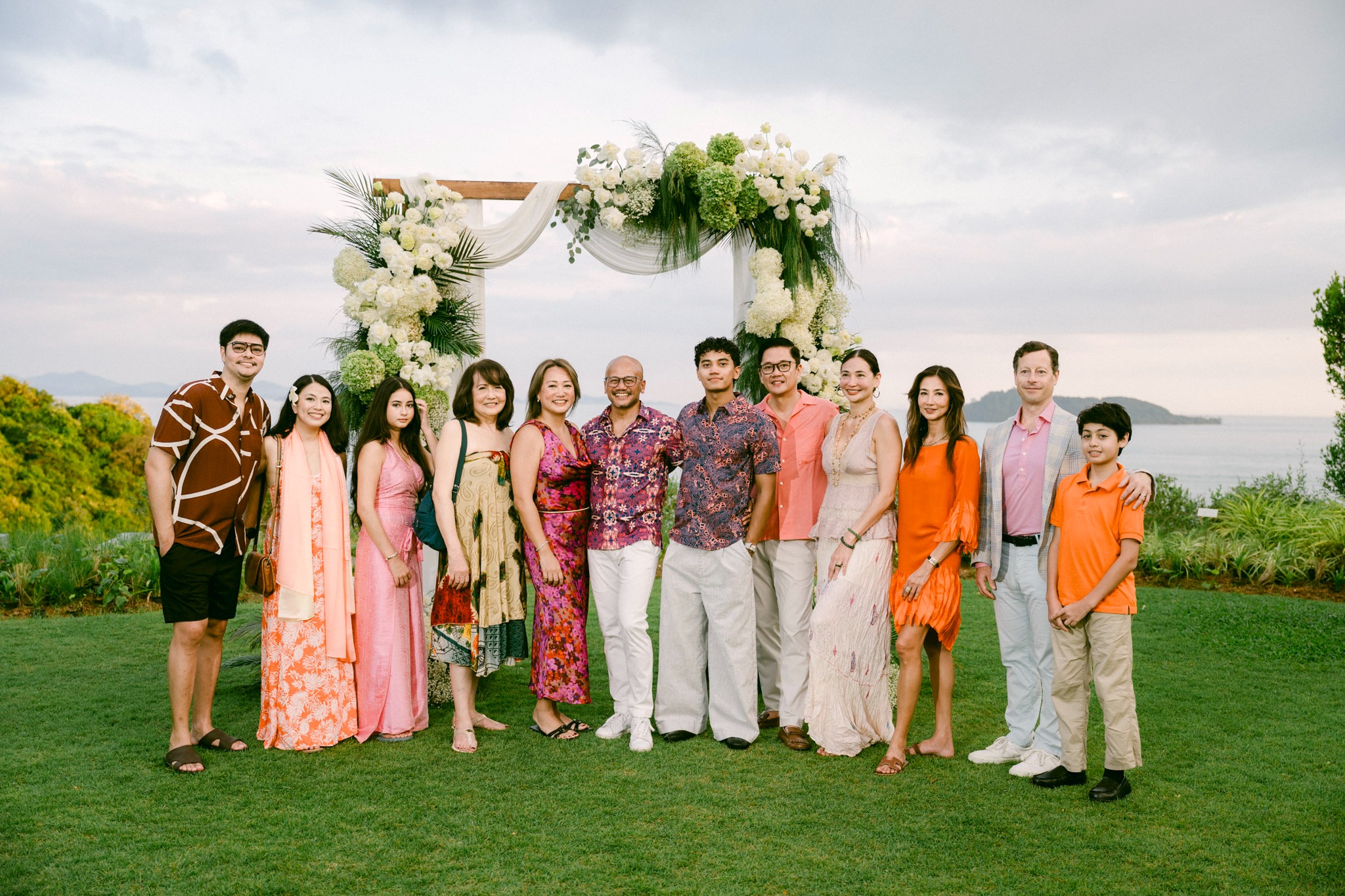
Three months later, on the lawn at Como Point in Phuket, during the golden hour before sunset, under an arch dressed in our favorite flowers, with my family and his son Mik watching, he proposed.
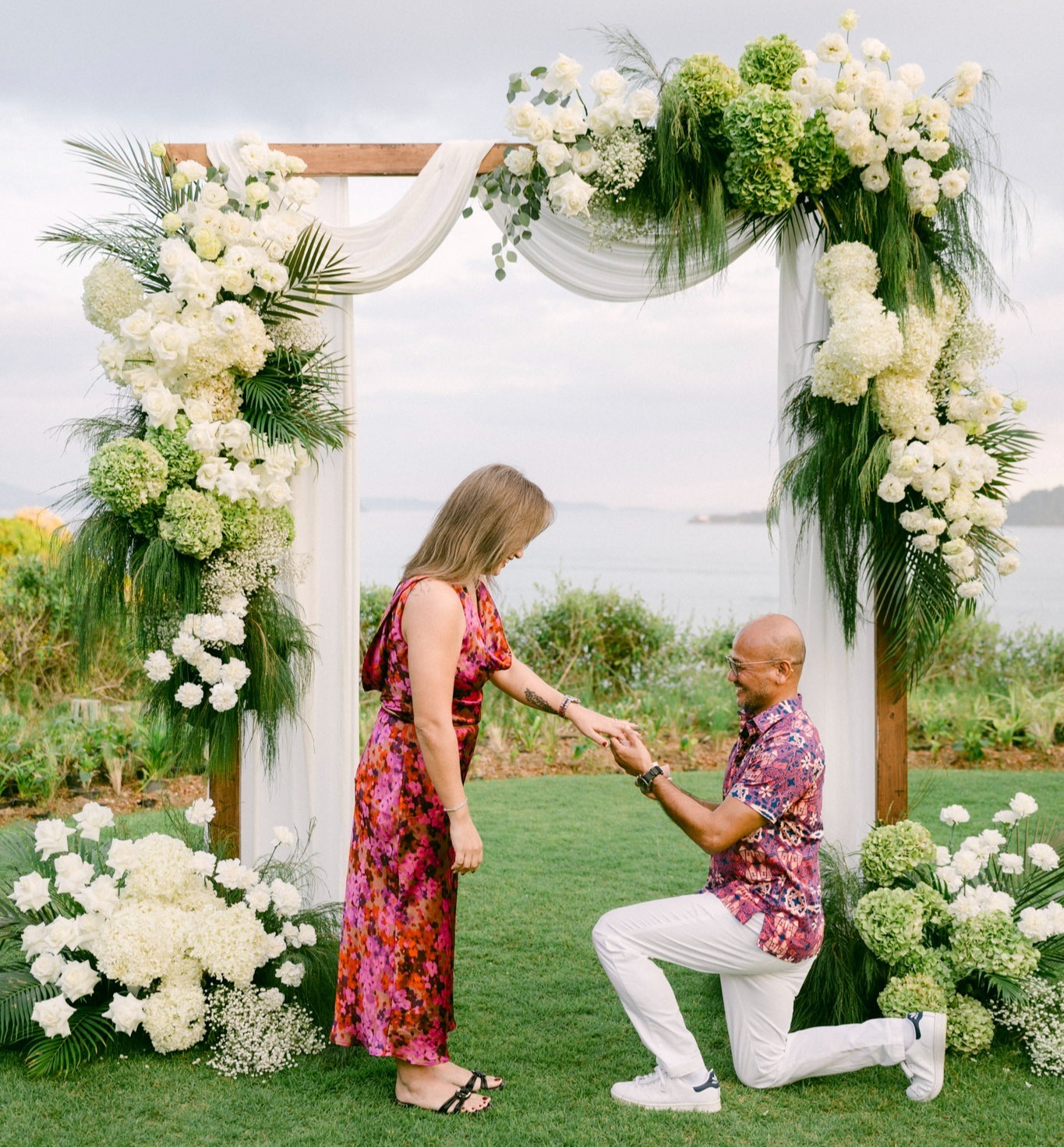
His speech stayed with me more than anything else that happened that day. He called me his spreadsheet sweetheart, his travel and adventure buddy, his learning and growth companion, his health and longevity co-pilot. I laughed, and I also felt calm and steady, because those weren’t random nicknames. They were the small truths of our relationship. The early morning airport runs, long walks and hard conversations, the quiet check-ins after a difficult day, the moments when the easy choice was silence, but we told the truth. We’d built a partnership where vulnerability isn’t used against you, instead it’s held with care. That’s what his words reflected back to me, we know each other deeply, and we’ve chosen to be each other’s safety, support system, and cheerleader for the life we’re building.
The Whimsical Mossy Forest
And then, on 20 June 2026, just six months after the proposal and with the guidance of our lawyers, we finally untangled the paperwork and navigated the bureaucracy. The Akad Nikah itself was attended by only our closest family and friends. It was intimate and deeply intentional. The months of documents, government office visits, and waiting had been worth it, because we were finally legally married, not just engaged with a plan.
On the afternoon of the ceremony, we drove to the home of Azran’s sister and brother-in-law, Azleen and Azmee, who had opened their doors to host our Akad Nikah. Traditionally, this ceremony is held in the bride’s family home, but with mine in the Philippines, they stepped in and made theirs the place where our families could gather, and witness the vows.
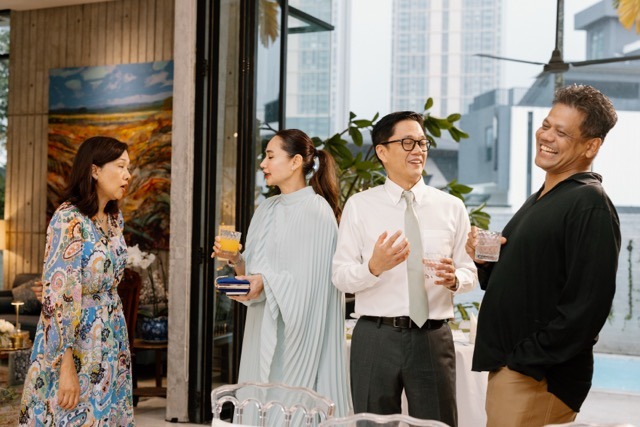
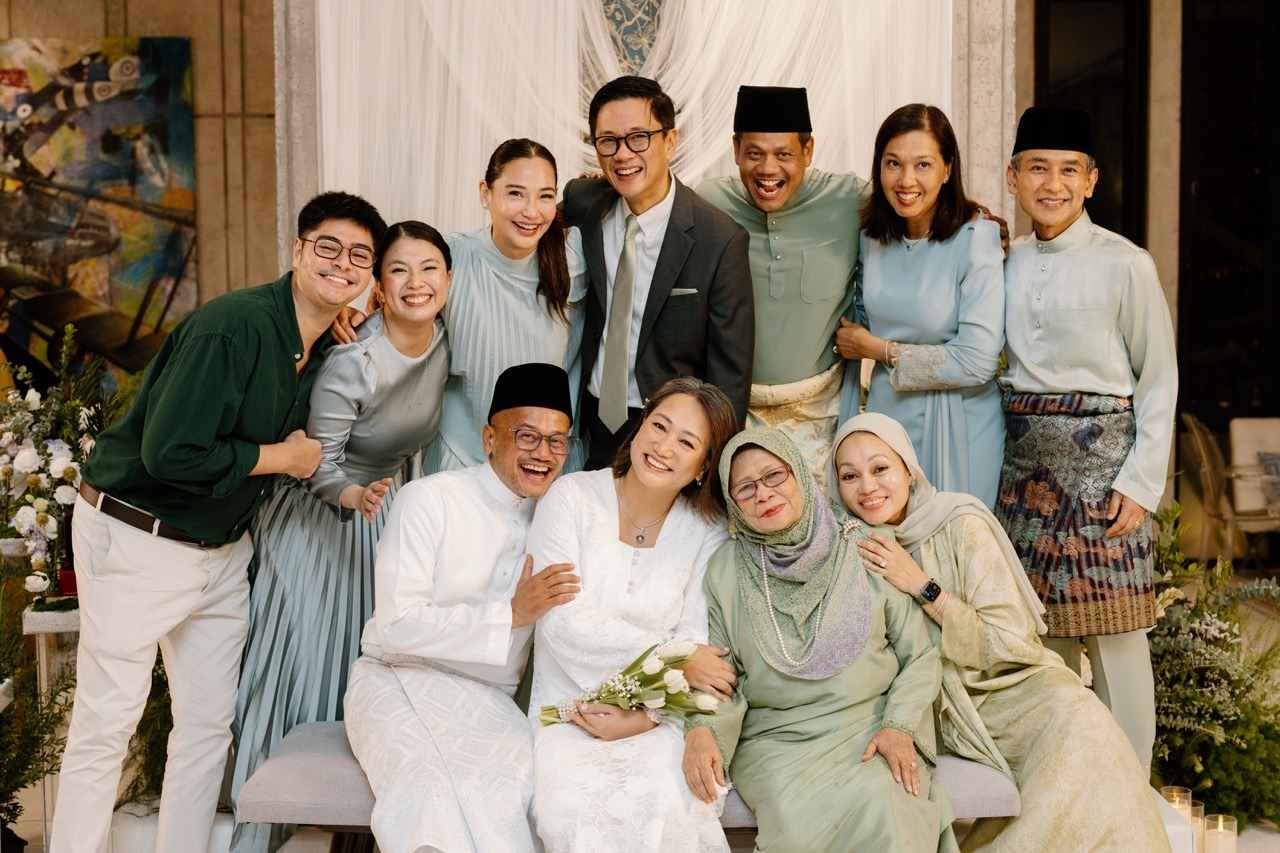
As we entered the home of Azleen and Azmee and before the other guests arrived, our immediate families gathered for a casual tea before the ceremony. Introductions, an exchange of names, hugs, and small talk we’re made. My family had already welcomed Azran, but watching his family do the same for me, and for mine, was unexpectedly emotional. It felt like an extension of what we’ve been building which are two people from different cultures choosing each other and, in the process, two families meeting and beginning to build a connection. I know an afternoon of hugs and small talk does not make a family. But it felt like the first real step, the start of a bond we hope will keep growing. That afternoon, we both committed to ourselves to nurturing it patiently, deliberately, and with care.
The generosity of opening their home and the care Azleen poured into transforming it continued to resonate with both Azran and me. We shared an AI-generated image with Azleen, and she used it as the blueprint for the whimsical mossy forest theme, carrying its mood, colors, and textures through the entire space. With her team of florists, they created pockets of a whimsical mossy forest throughout the house.
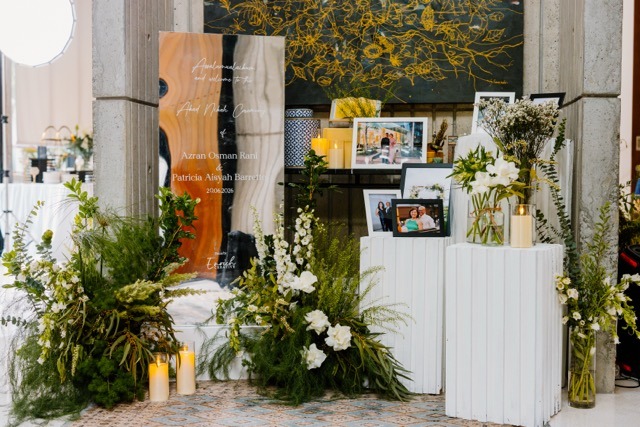
The foyer showcased our photos in mismatched frames, while wild sprays of eucalyptus and fern spilled onto the tile, with candles neatly tucked into the greenery as if they had grown there.
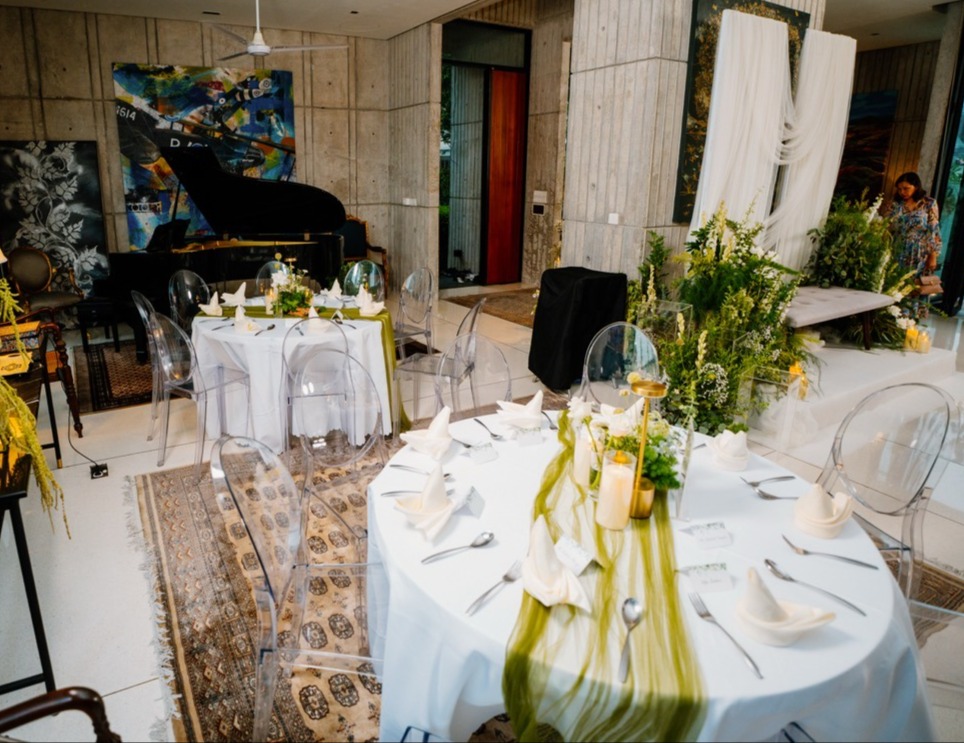
The living area traded its sofa for round tables with white tablecloths, gauzy runners, name cards and menus, and centerpieces that stayed true to the theme while adding just enough green gold to feel elevated.
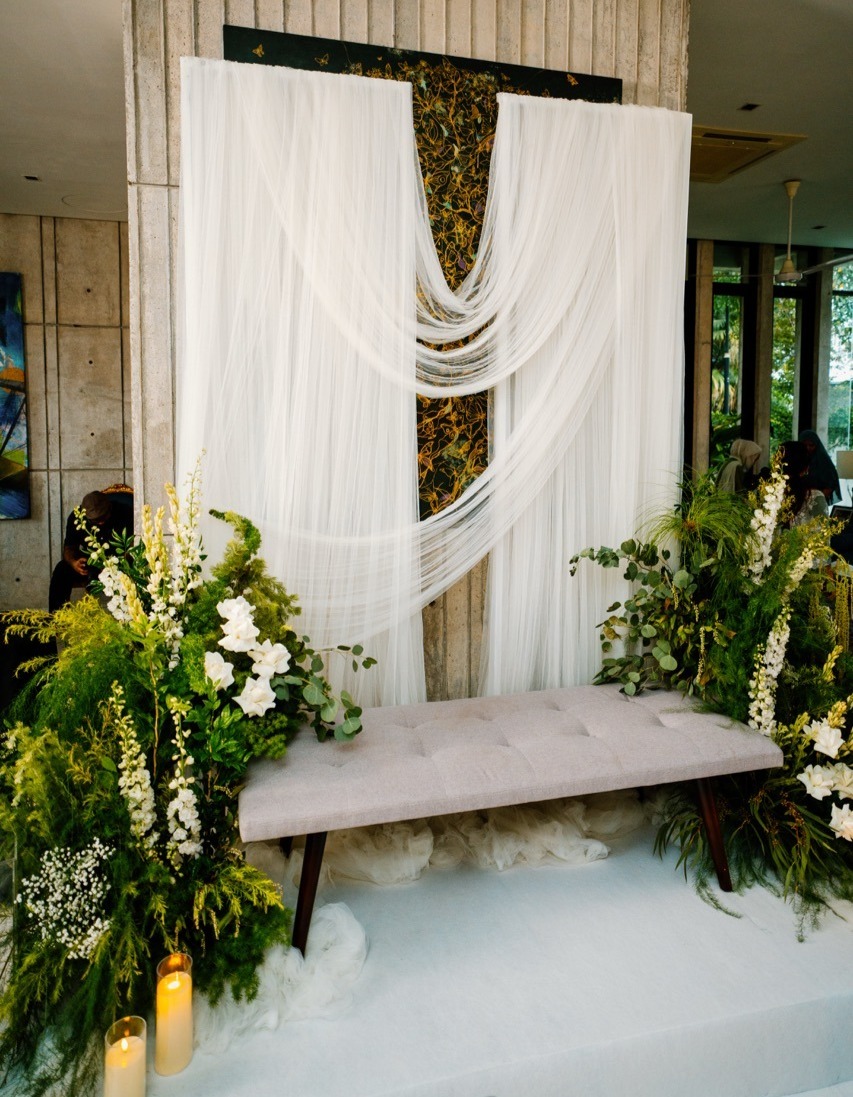
In the dining area, our pelamin (a decorated, raised stage where the bride and groom sit) is the focal point; it stood out beneath softly draped white fabric, with the foliage arranged to look wild and natural, like part of the forest spilling into the setup.
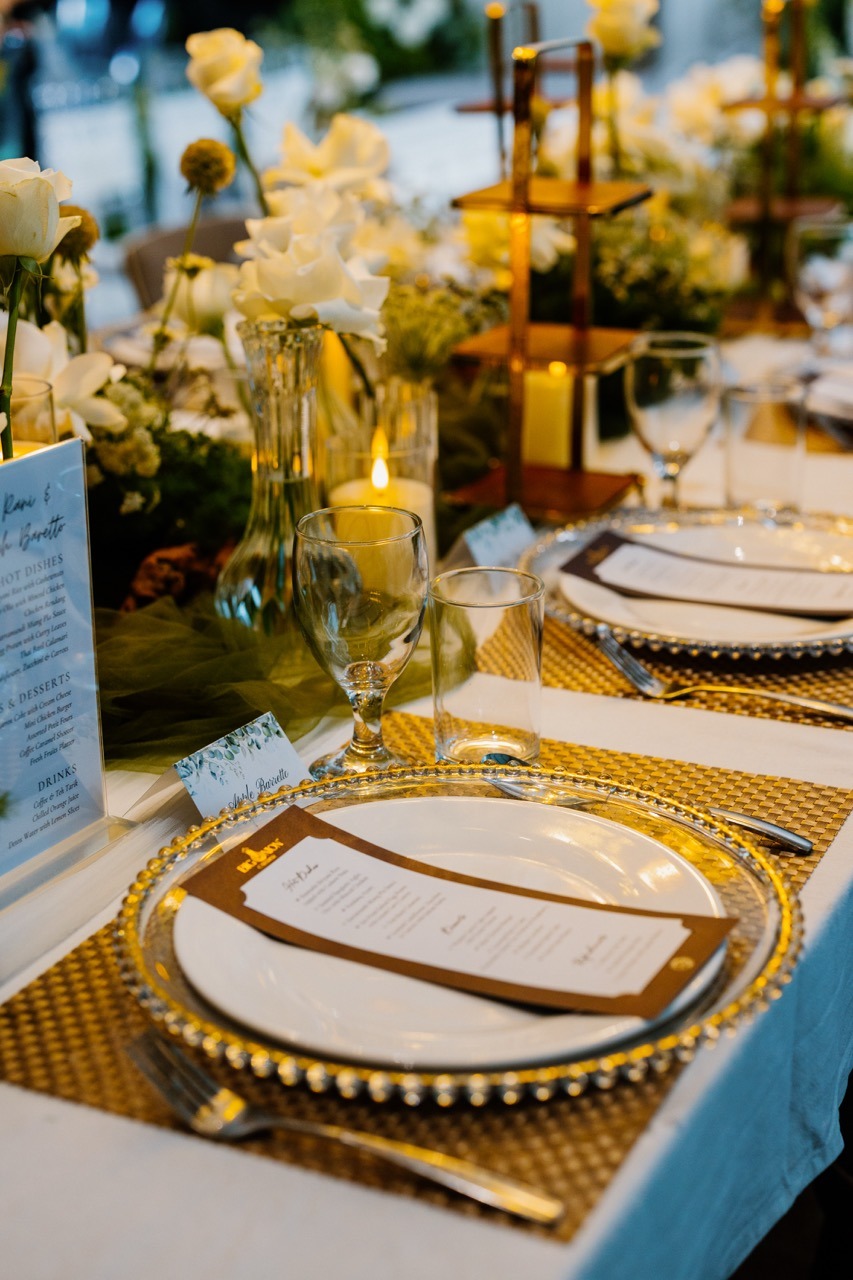
Even the main table for the bridal party dinner carried its own mossy forest touches. Forty of our closest people moved through one big open space, with the living and dining areas flowing together, pausing to take it all in, and you could see and feel how carefully every small detail had been executed.
Then came the Nikah itself. A Nikah is the official, legal, and spiritual marriage contract in Islam. It is the moment a couple promises to be together as husband and wife. The agreement makes their relationship fully official in the eyes of Allah and their community.
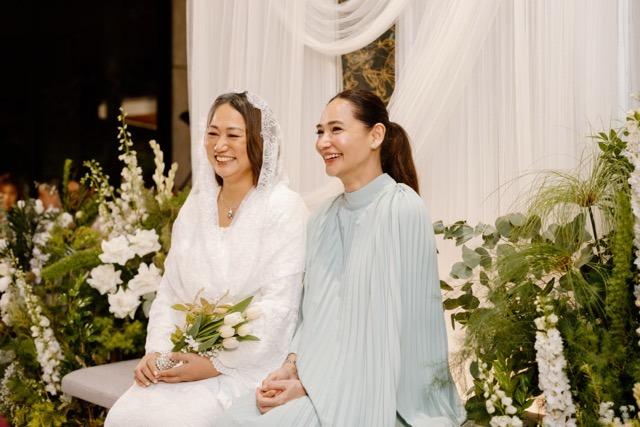
As the ceremony was taking place, I sat on the pelamin with my sister, Apple, beside me. Her presence reminded me I wasn’t alone. Even with our long-distance version of sisterhood, the foundation is still there. I’m still her youngest sister, and she will always show up for me. Our sisterhood mostly lives through Instagram updates and WhatsApp messages, so it meant something special that she flew in with my nephew and both their partners to be present for a ceremony that would last only minutes, and yet marked a life milestone for me.
With no male Muslim guardian to give me away, the state appointed a Wali Hakim. A Wali Hakim is a marriage guardian appointed by an Islamic court. In Islamic law, a bride needs a male relative, like a father, to give her away in marriage. When that relative is unavailable, a Wali Hakim steps in so the marriage remains valid. Securing this appointment was one of the steps required before we were granted permission to proceed with an Akad Nikah, and it ensured I entered the marriage with the same dignity, protection, and legal care a father or guardian is meant to provide.
The Wali Hakim then laid out what a husband vows to a wife and what a wife vows to a husband. He added that either of us could ask for a divorce if the other failed those vows. There was no “till death do us part” and no illusion that the marriage was unbreakable, just a clear, revocable agreement that Azran and I were consciously entering.
Growing up in the Philippines, marriage had always carried a certain weight of expectation for women, a finish line you were meant to reach and endure even after love had quietly left the marriage. But hearing the vows framed so clearly, I felt that expectation loosen into something truer to who we are, two people choosing each other and choosing, every day, to uphold what we promised. It reminded me of Como Point and his “spreadsheet sweetheart” speech, full of small truths of our relationship, not romantic because it was grand, but because it was deliberate.
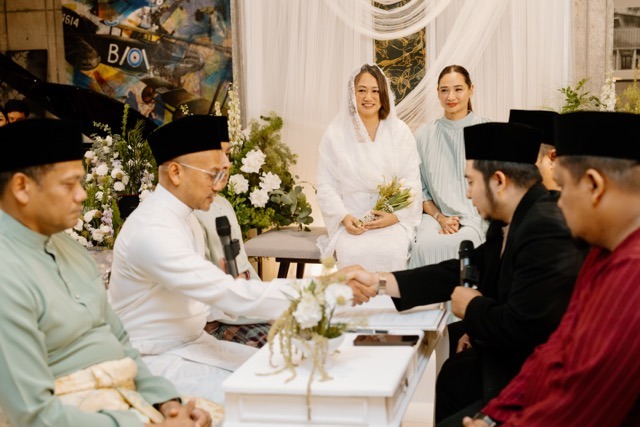
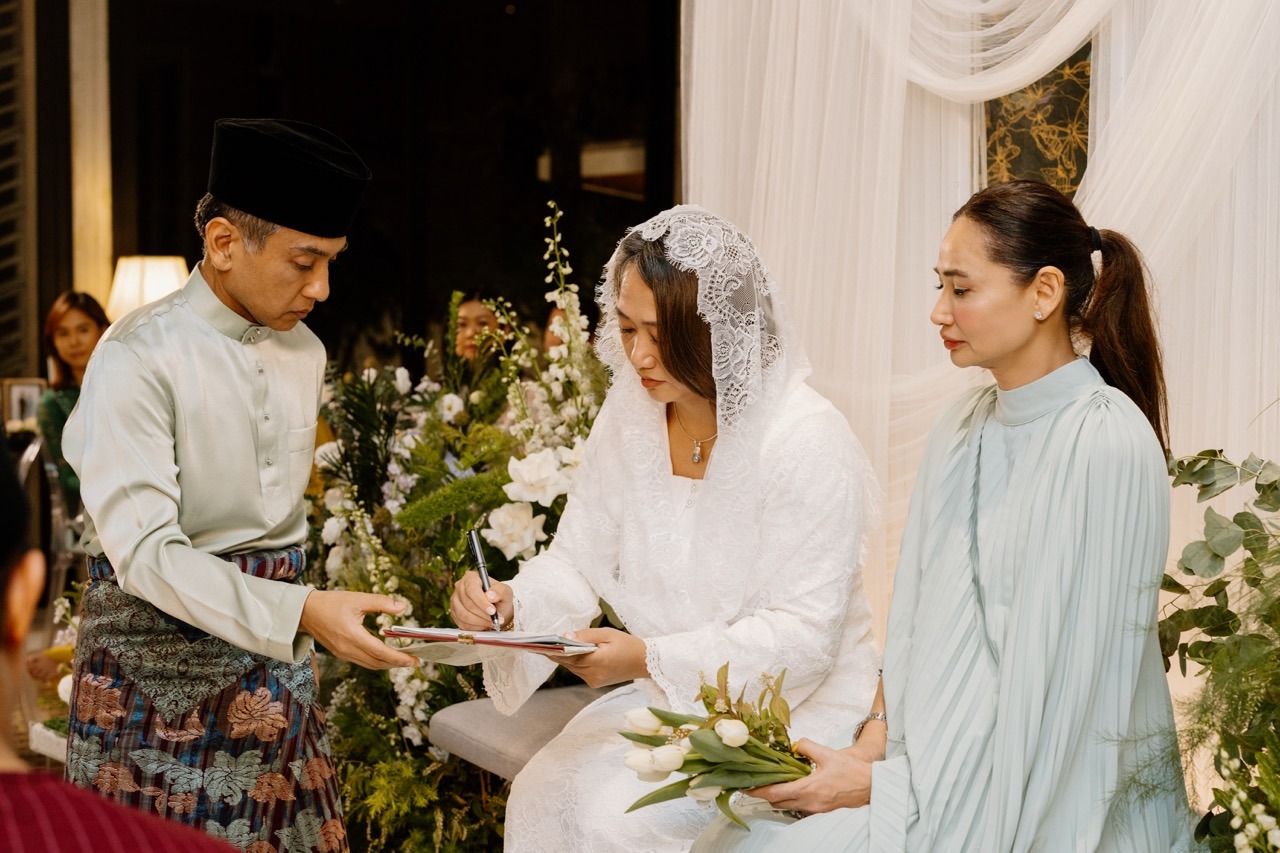
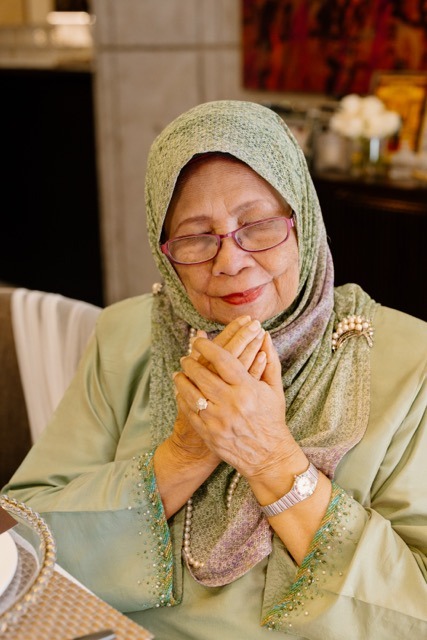
There was one more thing Azran and I feel most grateful for. Our original idea was a quiet civil ceremony, just the two of us at the JAWI office, done quickly, and efficiently But Azran’s mom made one simple request. She wanted to be a witness to our Akad Nikah. And somehow, that small ask became the catalyst for this the whole day. It led to forty guests, a whimsical mossy forest, and two families in one room. What began as an item on a checklist turned into something intimate and profound, an afternoon where our families didn’t just witness a legal milestone; they became a part of it.
Room for All of Us
Life afterward looks almost exactly like it did before. The same routines, the same home in Bangsar. What’s changed are the small details. We introduce each other now as husband and wife, and there’s a wedding band on each of our left ring fingers.
Somewhere between the drive to Azleen and Azmee’s house and the vows we made to each other, it started to feel like the beginning of our shared life with both our families, not just the two of us.
I wasn't only becoming Azran's wife on paper; I was stepping into a new place in his world, being welcomed as a daughter-in-law, sister-in-law, and aunt, learning the traditions of his family. And Azran was stepping into mine, too. Into the long-distance love that still shows up, the Filipino ways of teasing and caring and checking in.
Post a comment