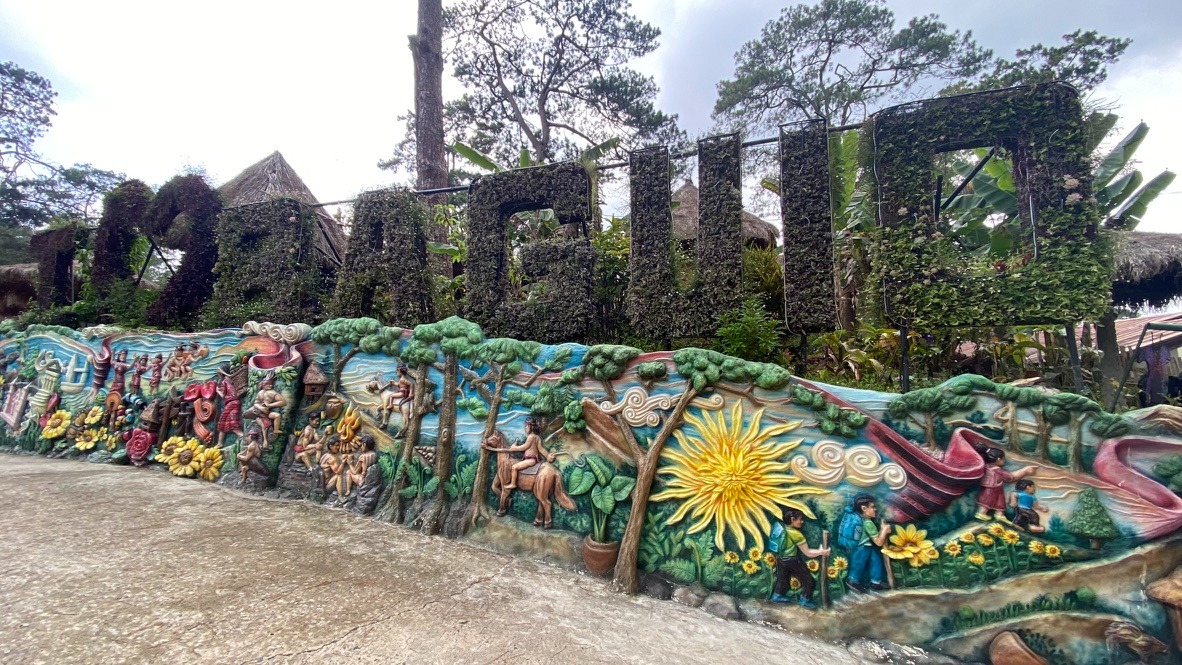
Rediscovering Baguio Beyond the Tourist Hotspots
Growing up, Baguio was a place of wonder to me. The scent of pine in the air as I inhaled the cold, my breath turning to smoke as I exhaled. Mountain views and nature spilled everywhere. There were strawberries in abundance and sweet treats like ube jam and peanut brittle made by nuns. To me it was otherworldly. I never saw that in my small world in Alabang, and it left an impression.
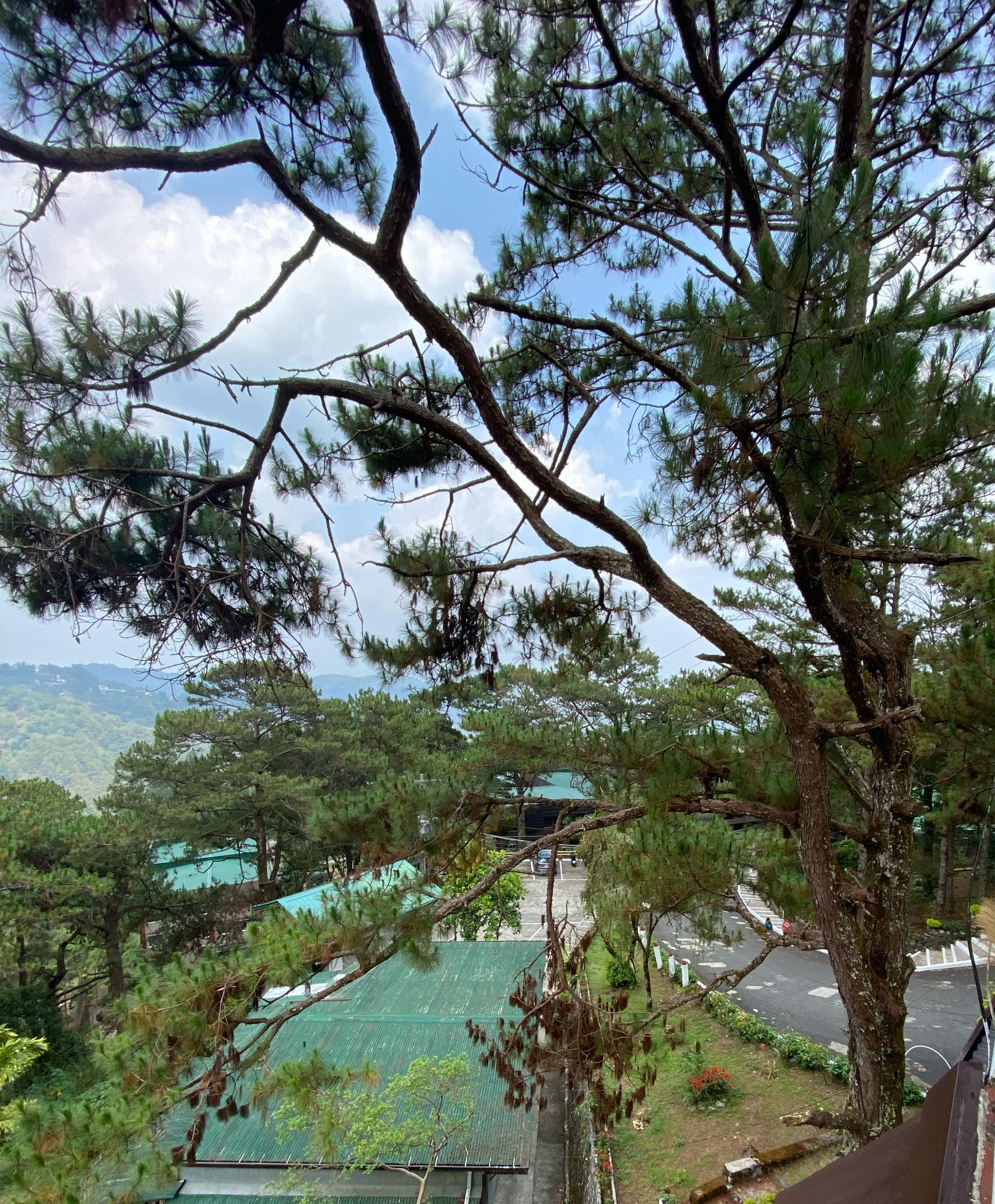
The handful of times I returned, my wonder slowly faded. New developments arrived. The old town charm became a tourist hotspot. The weather wasn't as cold as I remembered. The air lost the smell of pine. The fog only came during the last months of the year.
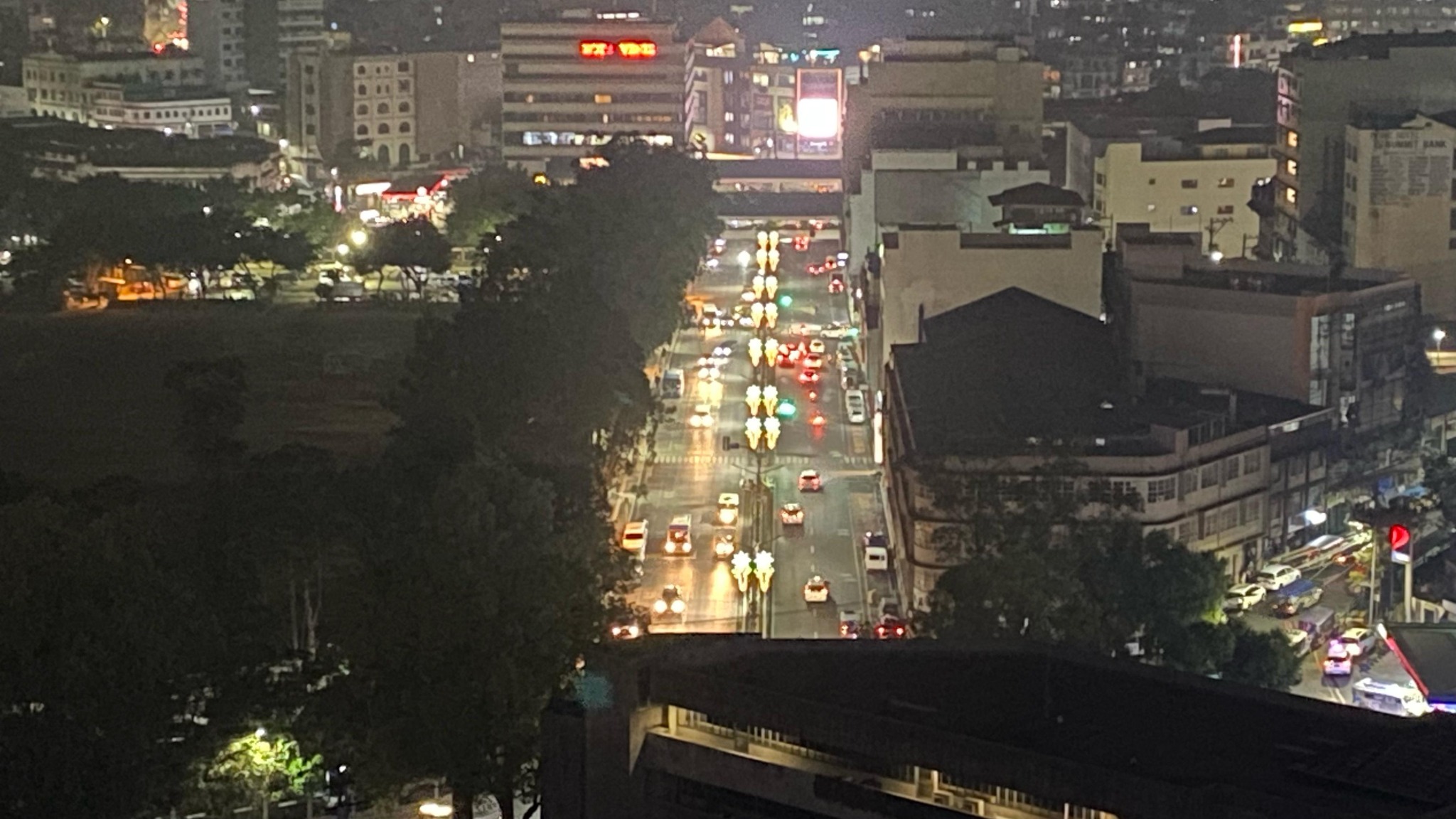
Yet even as wonder gave way to the realities of life, I still found myself drawn back to see how Baguio had changed, how it had adapted to the demands of locals and tourists alike. Last April, I went for a weekend just to see what was up. The first day was spent getting my bearings and trying the touristy things. I quickly realized this wasn't the vibe I wanted. The Burnham Park of my childhood memories was now overrun with kiosks selling food and trinkets. Session Road, once filled with people walking bundled up against the cold, was thick with smog from idling cars. At the Botanical Gardens, noisy crowds took photos in every corner while sales people shouted to get our attention, trying to convince us to dress up in Igorot outfits for souvenir pictures. And then there was the over-hyped food at Luisa's Cafe, a Baguio institution that fell flat with lukewarm soup, soggy noodles, and limp vegetables. To be fair, I chose the locations. I was partly to blame.
The second day, I decided I would take it slow. I started with breakfast at The Hillstation restaurant. I was the first one there and I enjoyed watching the morning sun hit small vases of flowers on the tables while Tagalog songs in a dialect I didn't recognize was playing in the background, a good tune that made the wait staff perk up, smile, and sing along.
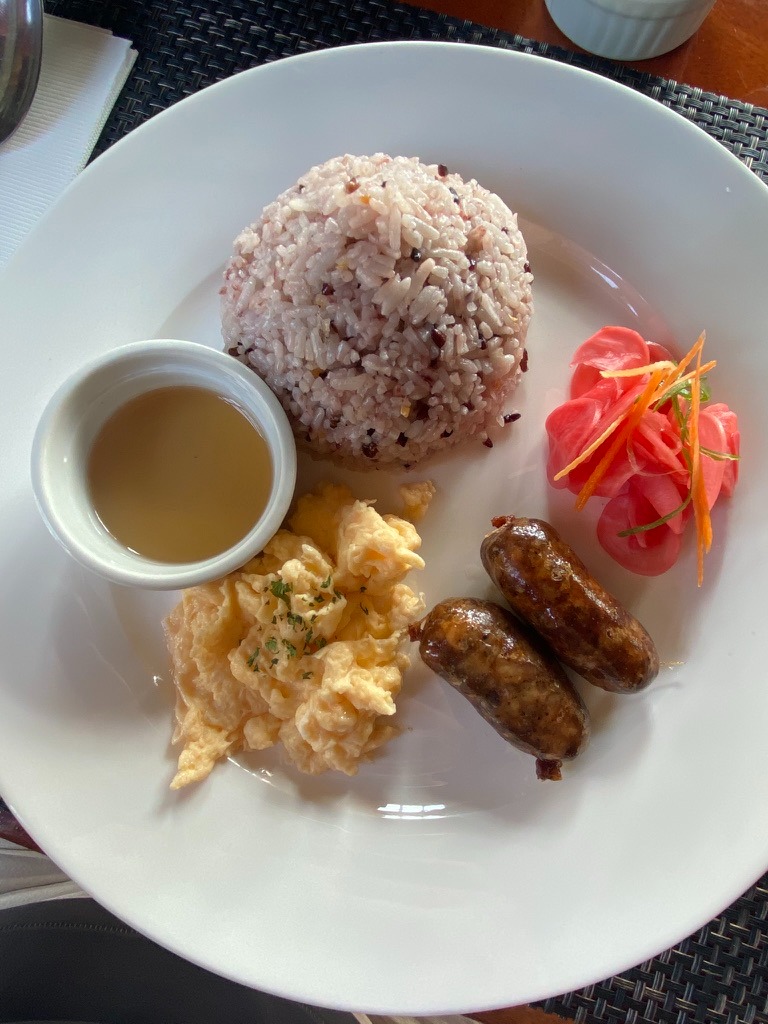
The best start to a day for every Filipino is a silog meal with black coffee. The meal comprises fried garlic rice, or sinangag, a fried egg, or itlog, hence silog, accompanied by various meats such as fried fish, local sausages, or marinated beef. Mine was local sausage from Vigan. As I savored each bite, I contemplated my agenda.
From the content I had been seeing online, Baguio has evolved into an artist's haven and a café city. With this in mind, I tailored my day to meet this new version.
My first stop was Mirador Eco Park. Not a museum or café, but necessary. I love nature and mountain views, both lacking on day one. I didn't want to miss this experience on day two.
I got into my Grab, excited, and started chatting with my driver. In the span of a fifteen-minute drive, I learned he was a native of Isabela who had moved to Baguio in 1997 when he was a kid. He shared the best places to buy vegetables in bulk, and it's not the wet markets, by the way. His love for malunggay and sadness that the plant doesn't grow in Baguio. As I enjoyed the ride, feeling the Baguio breeze on my face, I knew this was going to be a good day.
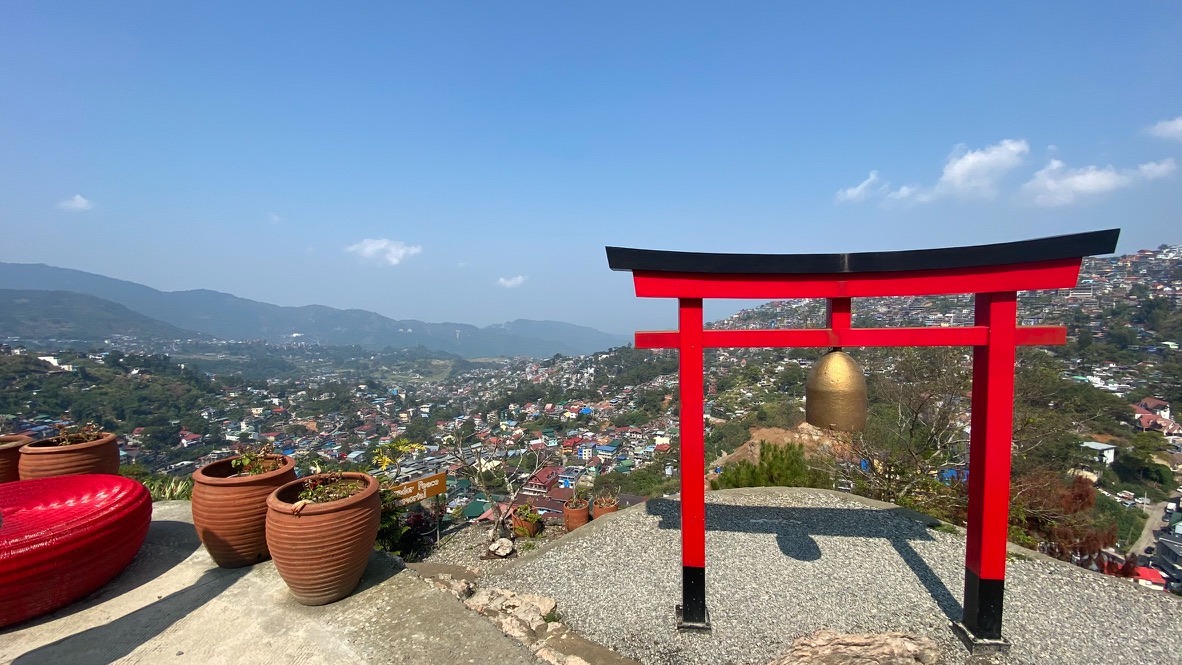
I arrived at Mirador at about 9:30 in the morning with no crowds yet. I studied the map and set off to explore. When I reached the Mirador Peace Memorial peak and surveyed the view, I saw houses scattered across the hills and remembered my driver. One of thousands who moved to Baguio for the weather, for a better quality of life. Could his house be one of those on the hill? I did a quick fact check: Baguio is now home to 477,000 people, up from 197,000 in the late 1980s. All these people, bringing their hopes, dreams, ideas, shaping the Baguio I was experiencing today.
After that moment of morning zen and introspection, I headed to my next stop, the BenCab Museum. This place had been here since 2009, and I was only experiencing it now.
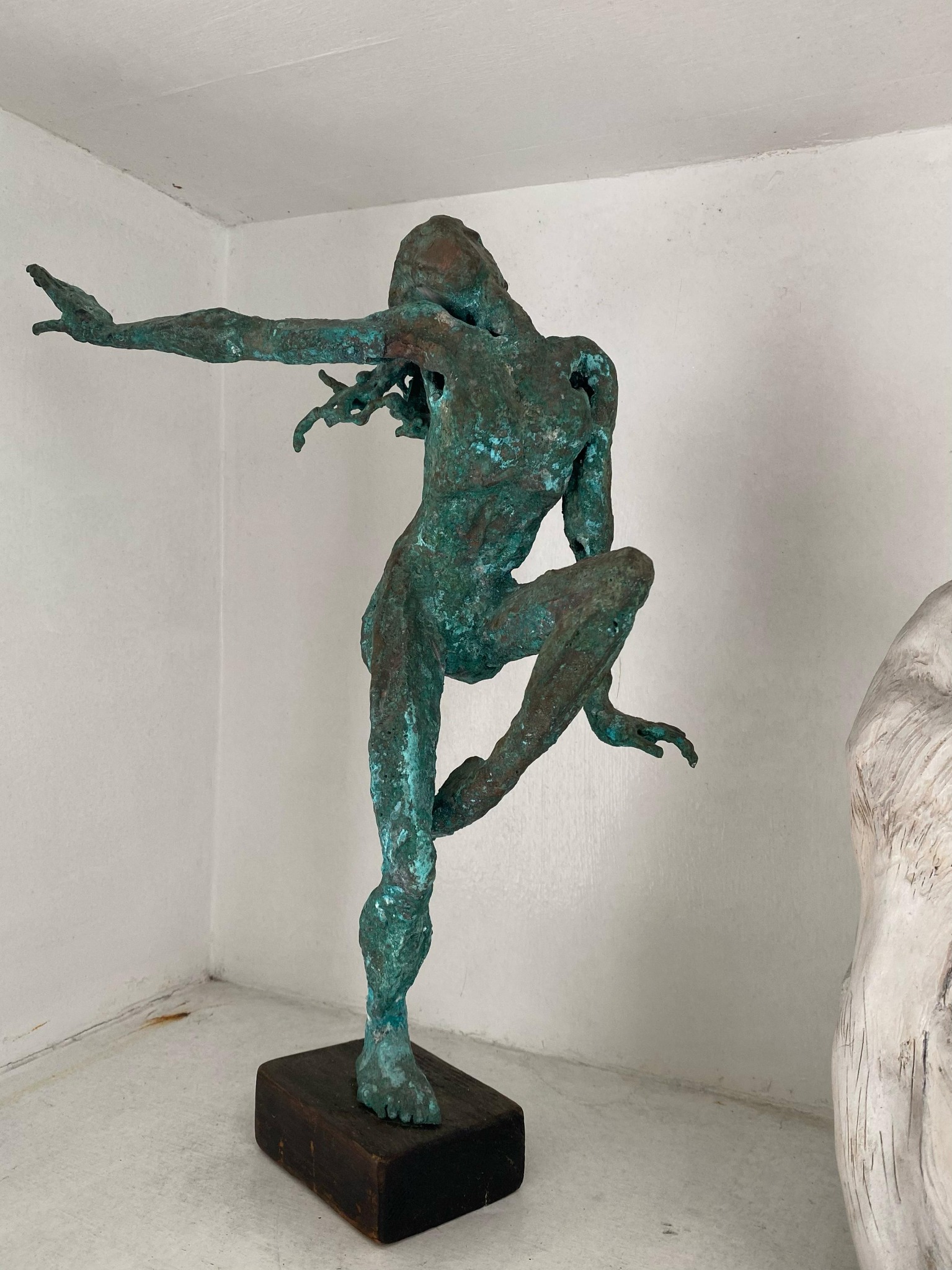
It was lovely. Well maintained and nicely curated with various sculptures, mixed media paintings from BenCab and other artists. Among all the artwork I saw, I connected most with a sculpture by artist Benhur Villanueva called Tayaw. Made of bronze, it looked to me like a woman confident, full of life, unencumbered by society opinions. She evoked the feeling of freedom. After admiring the sculpture, I got curious about the name and made a quick search. Tayaw is not a Tagalog word, but a traditional ceremonial dance of the Cordillera ethnolinguistic groups in the Philippines, particularly the Ibaloi, Ifugao, and Kankana-ey peoples. The term literally means "to fly," often characterized by eagle-like arm movements performed by dancers. This was wonderfully captured by the sculpture.
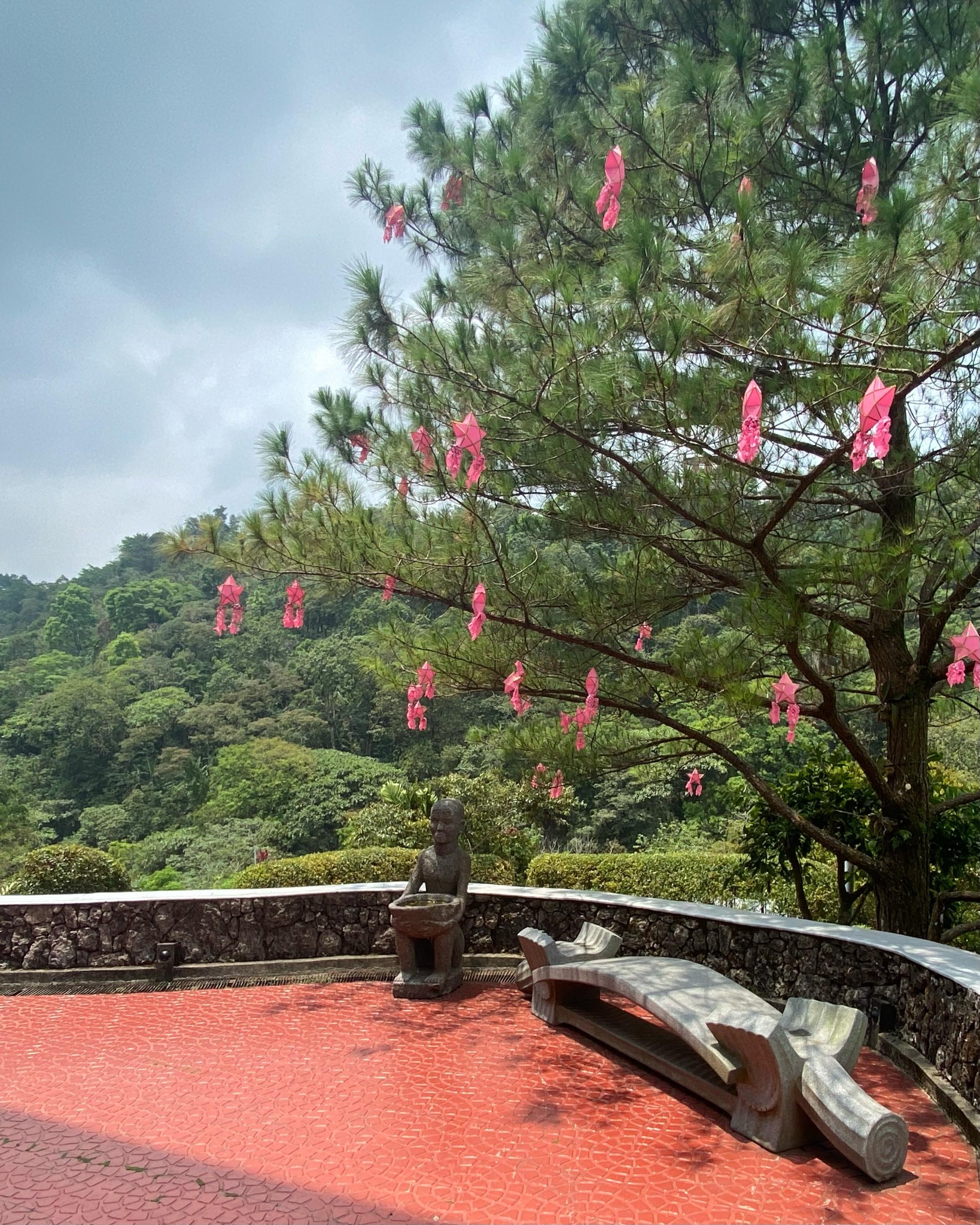
The other thing I enjoyed was the garden viewed from Café Sabel. Nice pockets of solitude you could claim as your own, to enjoy the view, contemplate the art, or simply have a quiet moment.
I spent time here, at first congratulating myself. So far, day two felt more intentional. As I sat there, fragments of memories emerged. Me on a boat ride in Burnham Park. Taho with stewed strawberries. The scent of pine trees and breath turning to smoke and thick hot chocolate. And now this garden at Café Sabel, the sculpture, the views. I was adding more to my Baguio collection of memories.
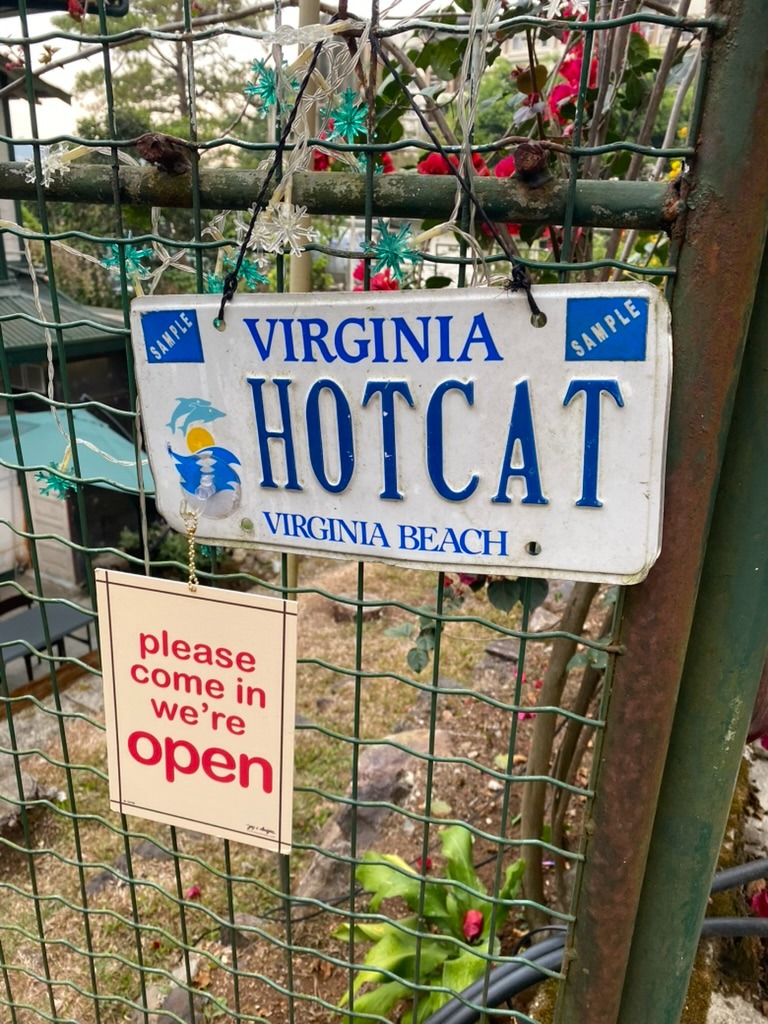
My last stop was a café called Hot Cat.
Another wonderful Grab ride, with a driver who excitedly told me there were so many cafés in Baguio and that this one was among the most popular. He should know because he had taken so many people there.
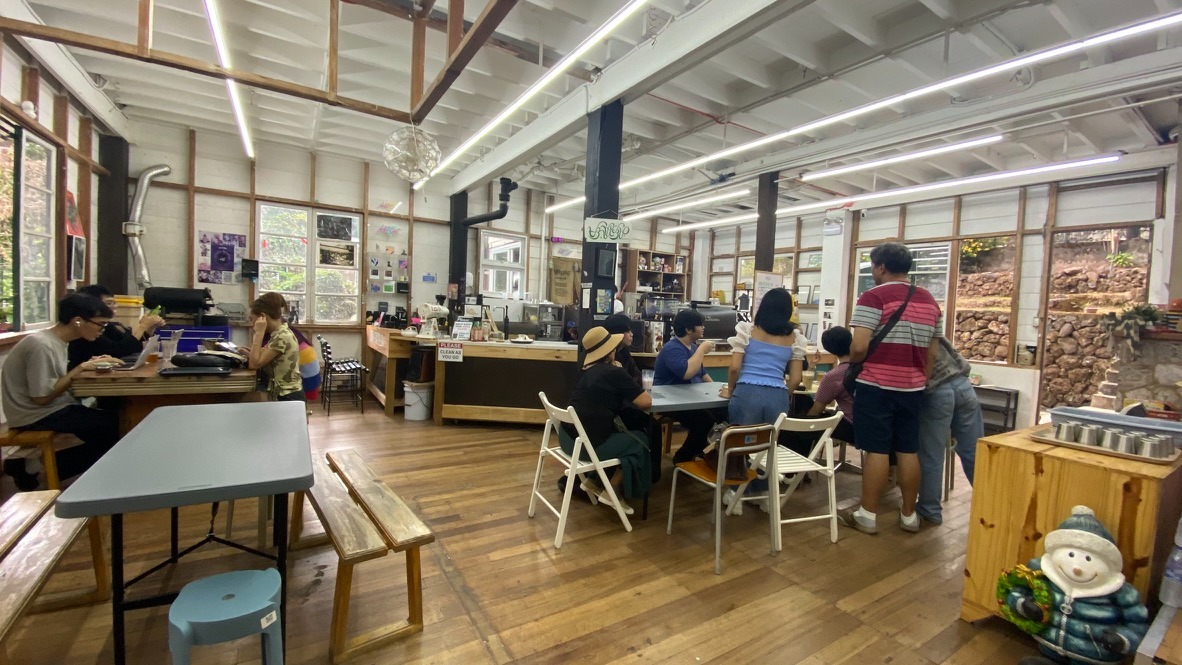
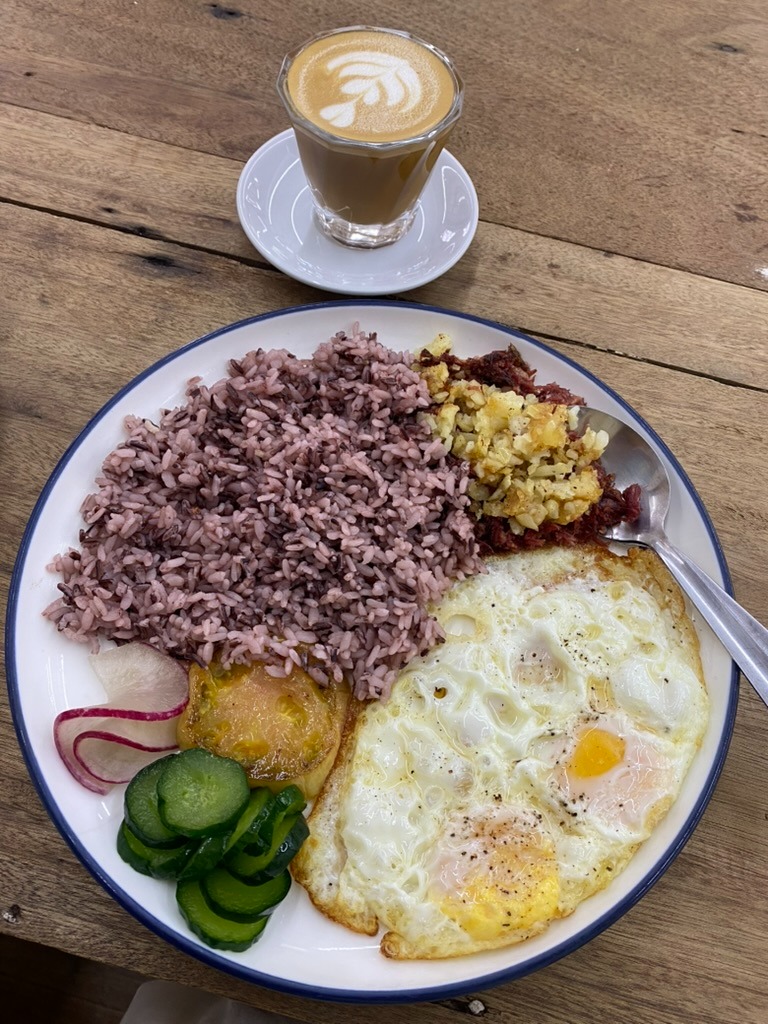
The café wasn't easily seen from the roadside. There was a small sign, and some steps going down. What greeted me was an assortment of mismatched wooden tables and chairs, some locals doing their crafts, some working, some enjoying their afternoon like me. The barista sat by the entrance, listening to music. No rushed feeling. I went to the counter to order. They smiled, waiting patiently for me to decide. A hot latter with oat milk or almond milk, whcihever is available and they can accommodate both. I ordered another silog meal, this time corned beef silog, or cornsilog, and it was the best I had ever had. Water at a filling station in the corner. WiFi, of course! the password given with a smile that communicated, stay as long as you like.
I watched locals and tourists as I enjoyed my meal and coffee. There was no feeling of time moving, only people coming and going. A place where your personal space is respected. There is only the sound of music, coffee machines brewing its next cup, occasional laughter and quiet chatter, the keyboard clicking from someone doing their work. In this day and age when everything is rushed and connections are transactional, this place was relaxed and welcoming.
I thought about how great my second day had been. I didn't rush. I didn't take a million photos. I didn't go to high tourist areas. I just moved through the day as if I were a local on a weekend, wanting to enjoy my time, and I was rewarded with wonderful memories. I headed back to Manila the following morning, happy and content. The trip had started off in so many wrong ways, yet was able to redeem itself on the second day. Now, on my way home, I was already looking forward to my next trip to baguio. I didn't know when it will be and that was okay. Maybe by then, Baguio would have changed again, and will be give me a different yet equally full experience. one that I am already looking forward to.
Post a comment